يتم الاحتفال باليوم الوطني للتوعية بفيروس نقص المناعة البشرية/الإيدز للسود (NBHAAD) في فبراير 7 من كل عام. تم إنشاؤه لزيادة الوعي حول تأثير فيروس نقص المناعة البشرية على مجتمعات السود والأمريكيين من أصل أفريقي. تمت ملاحظته لأول مرة في 1999 ويسلط الضوء على أهمية تقليل وصمة العار وزيادة مشاركة المجتمع. يركز NBHAAD أيضًا على تحسين الوصول إلى التثقيف والوقاية والاختبار والرعاية المتعلقة بفيروس نقص المناعة البشرية.
بيانات Virginia
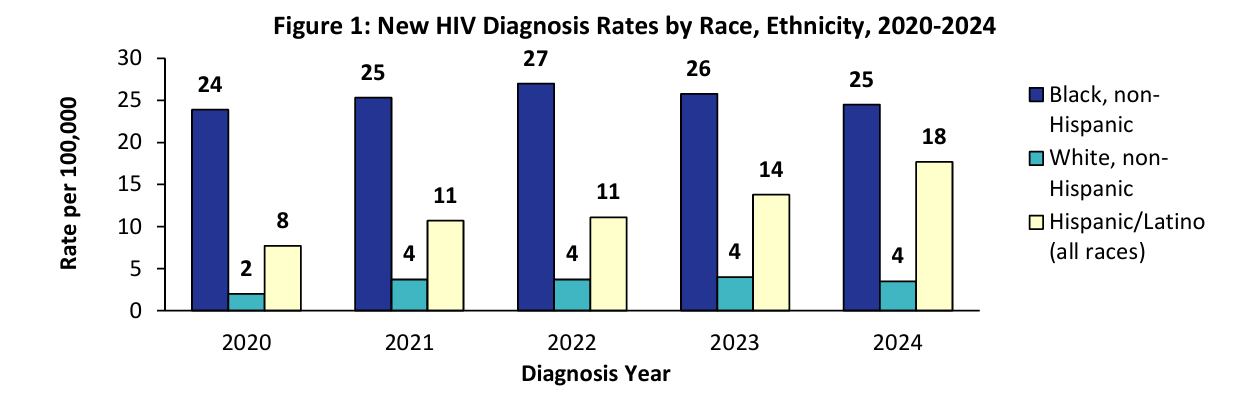
كما هو الحال في جميع أنحاء الولايات المتحدة، فإن المجتمعات السوداء والأمريكية الأفريقية تتأثر بفيروس نقص المناعة البشرية بشكل أكبر في ولاية فرجينيا. في 2024، بينما شكلت المجتمعات الأمريكية السوداء/الأفريقية 19.12% من سكان ولاية فرجينيا، شكلوا 50.2% من حالات تشخيص الإصابة الجديدة بفيروس نقص المناعة البشرية و 56% من الأشخاص المصابين بفيروس نقص المناعة البشرية في ولاية فرجينيا في ذلك العام. يوضح الشكل أدناه معدل التشخيصات الجديدة لفيروس نقص المناعة البشرية حسب العرق والإثنية لكل 100 و 000 شخصًا. يسمح استخدام الأسعار بالمقارنة بين أحجام السكان المختلفة.
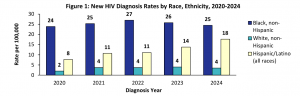
يمكنك العثور على بيانات إضافية عن فيروس نقص المناعة البشرية والأمراض المنقولة جنسيًا والتهاب الكبد الفيروسي على موقعنا الإلكتروني.
أسباب
وفقًا لـ KFF، قد تساهم العديد من التحديات في انتشار الوباء بين السود. وتشمل هذه التجارب مع:
- عدم الحصول على الرعاية الصحية
- معدلات أعلى لبعض الأمراض المنقولة جنسياً
- انخفاض الوعي بحالة فيروس نقص المناعة البشرية
مكافحة وصمة العار
كيف يمكنك المساعدة في مكافحة وصمة العار؟ تحدث بصراحة عن فيروس نقص المناعة البشرية للمساعدة في تطبيع الموضوع. هذا يساعد الآخرين على التعرف على فيروس نقص المناعة البشرية وتصحيح الأساطير والمعلومات الخاطئة. مراكز السيطرة على الأمراض والوقاية منها (CDC) لديها دليل لغة الوصمة يمكن أن تساعد في هذه المحادثات.
يمكننا جميعًا المساعدة في إنهاء وصمة فيروس نقص المناعة البشرية من خلال كلماتنا وأفعالنا في الحياة اليومية. كن نموذجًا يحتذى به للسلوك الإيجابي والداعم. تحقق من بعض سيناريوهات من CDC لنرى كيف يمكنك نمذجة السلوك الإيجابي عندما تشاهد وصمة فيروس نقص المناعة البشرية.
الوصول إلى خدمات الاختبار والوقاية القريبة منك
تتوفر فحوصات فيروس نقص المناعة البشرية والأمراض المنقولة جنسياً والتهاب الكبد الفيروسي مجاناً أو بتكلفة منخفضة في جميع أنحاء ولاية فرجينيا. تقوم VDH بتمويل إدارات الصحة المحلية والعيادات والمنظمات المجتمعية لتقديم خدمات الفحص إذا لم يكن لديك مقدم رعاية صحية أولية. للمزيد من المعلومات حول الاختبارات في ولاية فرجينيا أو للعثور على مراكز اختبار قريبة منك، تفضل بزيارة موقعنا الإلكتروني. صفحة ويب الاختبار.
يتوفر PrEP (الوقاية قبل التعرض) لفيروس نقص المناعة البشرية على شكل حبوب تؤخذ يوميًا، أو حقنة تؤخذ كل شهرين أو كل ستة أشهر. يمنع PrEP الإصابة بفيروس نقص المناعة البشرية من خلال الاتصال الجنسي حوالي 99% من الوقت عند تناوله على النحو الموصوف. توفر VDH الأموال لمواقع في جميع أنحاء Commonwealth لتقديم العلاج الوقائي قبل التعرض لفيروس نقص المناعة البشرية.
بالإضافة إلى ذلك، هناك أيضًا خيارات الوقاية بعد التعرض (PEP) للوقاية من فيروس نقص المناعة البشرية والأمراض المنقولة بالاتصال الجنسي. يتضمن PEP لفيروس نقص المناعة البشرية أخذ دورة من الأدوية للوقاية من الإصابة بفيروس نقص المناعة البشرية. من الأهمية بمكان أن تبدأ هذه الأدوية في غضون 72 ساعة من التعرض المحتمل. يتضمن DoxyPEP تناول المضاد الحيوي الدوكسيسيكلين بعد ممارسة الجنس دون وقاية لمنع الإصابة بالأمراض البكتيرية المنقولة جنسيًا. DoxyPEP متاح في معظم الإدارات الصحية المحلية.
إذا كنت مهتمًا بـ PrEP أو PEP، فتفضل بزيارة موقعنا صفحة ويب PrEP و PEP لمعرفة المزيد أو العثور على عيادة PrEP بالقرب منك. كما هو مذكور أعلاه، فإن nPEP حساس للغاية للوقت، لذا يرجى الاتصال بمزود الخدمة أو الخط الساخن الخاص بنا إذا كنت تعتقد أنك تعرضت لفيروس نقص المناعة البشرية وتحتاج إلى PEP. لمعرفة المزيد عن DoxyPEP، اقرأ صحيفة وقائع DoxyPEP.
رد وزارة الصحة في فرجينيا
يضم قسم الوقاية من الأمراض التابع لوزارة الصحة في ولاية فيرجينيا برامج متعددة تتناول الوقاية من فيروس نقص المناعة البشرية وعلاجه. وهذا يشمل:
- التمويل أو الإشراف أو الموارد أو الدعم لإدارات الصحة المحلية والمجتمع و/أو المنظمات السريرية من أجل:
- برامج اختبار فيروس نقص المناعة البشرية والأمراض المنقولة بالاتصال الجنسي والتهاب الكبد الفيروسي
- برامج شاملة للحد من الضرر
- توزيع PrEP و PEP و DoxyPEP
- خدمات رعاية فيروس نقص المناعة البشرية
تعرف على المزيد حول الخدمات التي تقدمها VDH على موقعنا الإلكتروني. إذا كنت ترغب في المشاركة في أي من مجموعات المجتمع لدينا، تفضل بزيارة صفحة المشاركة.
تواصل للحصول على الدعم
إذا كانت لديك أي أسئلة أو كنت بحاجة إلى دعم إضافي، فاتصل بالخط الساخن للوقاية من الأمراض في ولاية فرجينيا. مستشارو الخط الساخن متاحون طوال أيام الأسبوع من 8 صباحًا إلى 5 مساءً. يُغلق في أيام العطلات الرسمية لولاية فرجينيا.
ال رقم الخط الساخن هو (800) 533-4148 وهي مجانية.
بإمكان موظفي الخط الساخن مساعدتك في الوصول إلى البرامج والموارد اللازمة في جميع أنحاء ولاية فرجينيا.